Melvinmania
Warner Archive delivers a cult classic in possible search of a cult

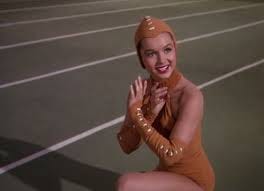
When I teach a short section on musicals to my Language of Film class at New York University, the lecturer ahead of me usually screens Singing in the Rain, and why not; I then scatter crumbs from the likes of The Bandwagon and Meet Me In St. Louis and then rev up the time machine to land at both Rocky Horror and La La Land. I have little actual affection for the Chazelle film but the students are keen. Anyway, if I have time I encourage my charges to look Beyond The Freed Unit when conducting explorations into MGM. Check out the likes of Hit The Deck, or Two Weeks With Love, or A Date With Judy, that sort of thing. All eye-popping, all peppy, all, well, a little odd by the lights of Ye Olde Contemporary Sensibilities. Roy Rowland directed Deck (he also made The 5000 Fingers of Dr. T, which Nick Pinkerton and I did a commentary on for Powerhouse/Indicator a seeming lifetime ago) and Love, while Richard Thorpe directed Judy. Judy features the song “It’s A Most Unusual Day” while Love features support girl Debbie Reynolds immortalizing “Aba Daba Honeymoon” with Carleton Carpenter. Wonder if that song gave Hanna and Barbera the idea for The Flintstones. Somebody ought to look that up. We can’t credit either Rowland or Thorpe with anything resembling a personal directorial signature. George Sidney — coincidentally a co-founder of Hanna Barbera studios — developed an almost insanel snappy cutting style in the late ‘50s and early ‘60s that I’m convinced had a discrete influence on Russ Meyer, but that’s about it. Which brings us to amiable Don Weis. One thing that makes his 1953 I Love Melvin, out now in an immaculate edition from the Warner Archive, such a delight is the nonchalance with which Weis approaches the near-absurdist fluff of the storyline, which begins with stars Debbie Reynolds and Donald O’Connor meeting cute and mildly hostile in Central Park, then soon encountering each other again on Broadway without even remembering their former antipathy. O’Connor’s an aspiring photographer, Reynolds is a showgirl who’s surprisingly game about taking the role of, yes, a football in a goofy musical. So in the tradition of the Freed unit, and Donen’s Give A Girl A Break, this is a backstage musical, and contains a further meta dimension in a scene in which its principles go to the movies and watch, yup, a musical. Give A Girl A Break was a favorite of Jacques Rivette, who cited it as an inspiration for his 1995 Haut, Bas, Fragile. And Melvin made his Best of 1954 list (it didn’t get to France right away, hence the time lag). RIvette Love has been known to jumpstart critical reappraisal — you remember what happened with Showgirls — but by the same token Melvin is not really in need of such a thing. It’s just in need of viewers, because it’s an unalloyed delight. In a sense it’s a Gene Kelly movie with Gene Kelly removed. I know a few people who find Gene Kelly kind of annoying — I’m a big fan and even I can admit that he’s sometimes a tad too “check me out!” — so for them Melvin will approach something like MGM perfection. It kind of does regardless of your Kelly feelings. And face it, Reynolds and O’Connor are two of the greatest troupers in cinema.